Table of Contents
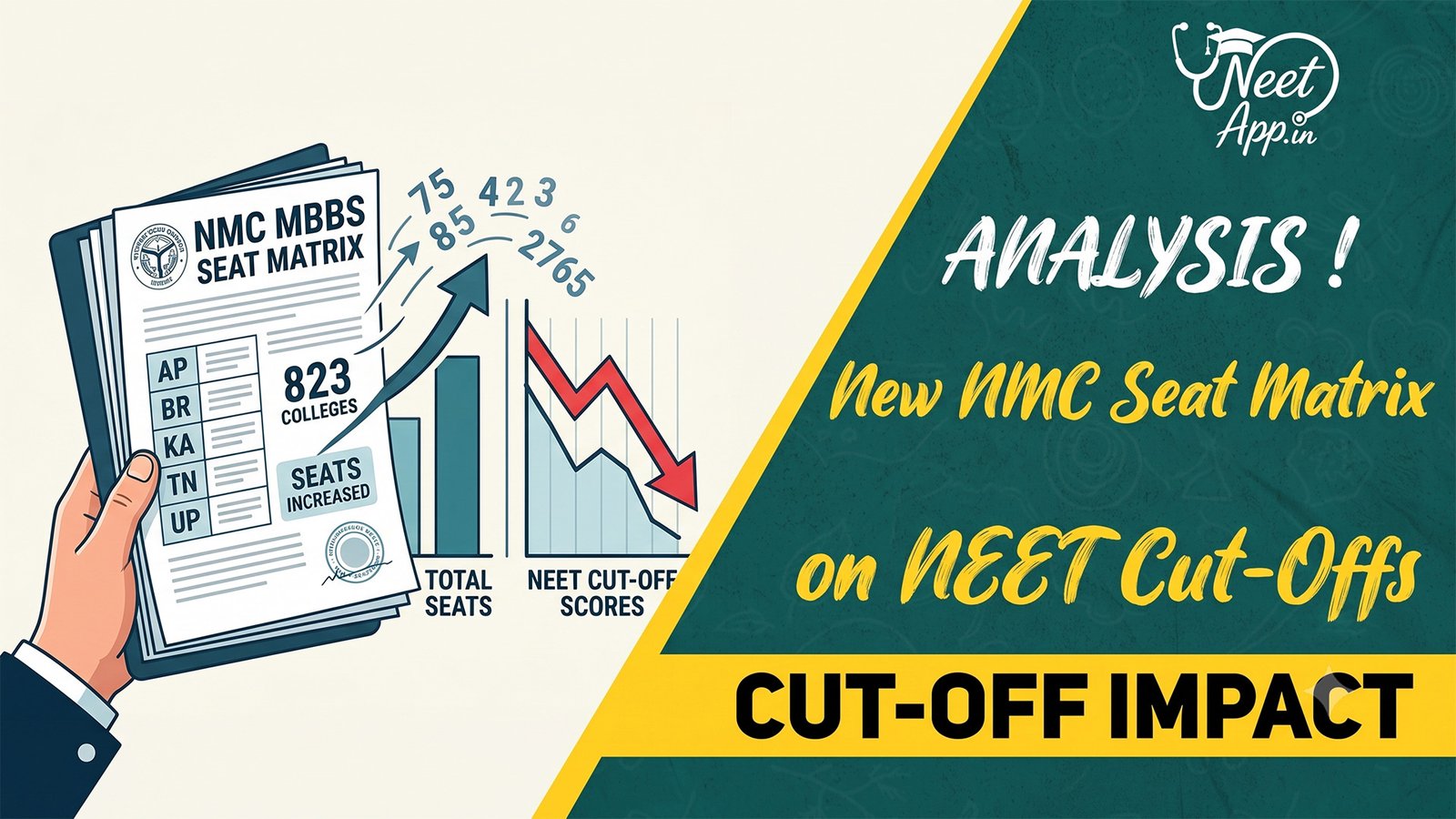
The medical education landscape in India is undergoing a massive transformation this year. Following the latest update from the National Medical Commission (NMC), the overall MBBS seat matrix has seen a tremendous expansion across the country. For NEET UG aspirants anxiously waiting for counseling, this is the most critical piece of news, as a larger seat pool directly influences the ultimate cut-off scores required to secure a medical seat.
Breaking Down the 823 Medical Colleges Data
According to the official list released by the NMC, the country now boasts a robust network of 823 medical colleges. This expansive list includes both established institutions renewing their intake capacities and a slew of newly established medical colleges finally receiving their letters of permission. New government establishments like the Government Medical College in Piduguralla (Andhra Pradesh) with 50 seats, and the Government Medical College Dantewada (Chhattisgarh) with 50 seats, are officially open for admissions. This sheer volume of available institutions means the competition funnel is slightly wider than in previous years.
Government vs. Private Seats: Where is the Real Growth?
While government medical colleges have seen steady growth, a significant chunk of the seat expansion comes from the private sector and new establishments. For instance, in Bihar, private institutions accounted for 550 increased seats, including 100 seats at the newly established Buddha Hospital and Research Institute. Similarly, in Karnataka, private management seats saw a massive increase of 1,150 seats across various colleges, including 150 seats at the new ALVA’S Institute of Medical Sciences and Research Centre. This dynamic shift gives students more options, particularly those looking to leverage state management quotas.
The Direct Link Between MBBS Seat Matrix and NEET Cut-Offs
Why Increased Intake Capacity Lowers the Closing Ranks
The fundamental rule of NEET counseling is based on supply and demand. When the total number of available MBBS seats increases, the closing rank for the final round of counseling naturally drops. Because thousands of new seats have been injected into the system, students who might have missed out by just a few marks in the previous year now have a much higher statistical probability of securing a seat. The bottom-line cut-off score is expected to dip, providing a safety net for borderline candidates.
The Ripple Effect on State Quota (85%) vs. All India Quota (15%)
Every new government medical college seat added to the matrix is split between the 85% State Quota and the 15% All India Quota (AIQ). For example, the 50 new seats at Government Medical College, Nashik (Maharashtra) will contribute to both pools. While the state’s native students will benefit the most, the cumulative addition of AIQ seats from states across India will also gently lower the AIQ cut-offs, benefiting top scorers who wish to migrate across state lines.
Expected Category-Wise Impact: General, OBC, SC, and ST
What It Means for General and EWS Aspirants
The General and Economically Weaker Sections (EWS) categories traditionally face the steepest cut-offs. However, the aggressive expansion in high-capacity states will provide noticeable relief. With hundreds of new seats added to the General pool, the intense bottleneck that usually occurs at the 600-615 mark range will see some easing, allowing more unreserved candidates to secure government seats in the subsequent mop-up rounds.
The Relief Factor for Reserved Categories
For OBC, SC, and ST candidates, the expansion of the seat matrix is equally promising. The proportionate reservation applied to the newly increased seats in institutions like the Government Medical College, Mahabubnagar (Telangana), which added 25 seats, means the cut-offs for reserved categories will see a proportional downward shift. This ensures greater inclusivity and access to medical education for students from marginalized backgrounds.
State-Wise Analysis: Who Stands to Benefit the Most?
High-Growth Hubs: Karnataka, Tamil Nadu, and Uttar Pradesh
Certain states have emerged as absolute winners in this NMC update, heavily impacting their state merit lists:
- Karnataka: The state saw a massive surge, particularly in the private sector with 1,150 increased seats. New establishments like Chettinad Institute of Medical Education and Research brought in 100 fresh seats.
- Tamil Nadu: A dominant player in medical education, Tamil Nadu private colleges added 800 seats, with new institutions like APS Medical College Hospital and Research Institute launching with 150 seats.
- Uttar Pradesh: The state aggressively expanded its private sector by 800 seats, bringing in new colleges like Fulan Singh Medical College with 100 seats.
Impact on Other Major States (Rajasthan, West Bengal, Telangana, Bihar)
- Rajasthan: Experienced a massive boost of 900 increased private seats, including 150 at the newly established Bharat Vikas Institute of Medical Sciences.
- West Bengal: Added 325 government seats (including 50 at Prafulla Chandra Sen Government Medical College) and 500 private seats (including 150 at the new SKS Medical College).
- Telangana: Government seats increased by 110, while private colleges saw a surge of 700 seats, including 150 at the new Raja Rajeshwari Institute of Medical Sciences – Girls.
- Bihar: Recorded 190 increased government seats across colleges like Darbhanga Medical College, and 550 private seats.
Strategic Advice for NEET Aspirants During Choice Filling
With this new data in hand, your counseling strategy must evolve. Do not rely solely on last year’s closing ranks.
- Include New Colleges: Add the newly approved colleges (like Sikkim Government Medical College with its 100 seats) to your preference list. New colleges typically have slightly lower cut-offs in their inaugural year.
- Broaden Your Horizons: If you are a borderline AIQ candidate, research the newly added seats in states like Chhattisgarh, which added 50 seats each in new government colleges in Jashpur, Kabeerdham, and Manendragarh.
- Track the Mop-Up Rounds: With a larger seat matrix, seat blocking will occur in the initial rounds. Stay patient and participate actively in the mop-up and stray vacancy rounds, where the true impact of these new seats will be felt.
Frequently Asked Questions (FAQs) About NMC Seat Upgrades
Q: Will the new private medical colleges have government quota seats?
A: Yes, in most states, a specific percentage of seats in newly established private colleges is reserved for the state counseling authority to fill at subsidized government fees.
Q: Are the newly added government seats included in the 15% All India Quota?
A: Absolutely. 15% of all newly approved seats in government medical colleges across the country will be surrendered to the central MCC counseling for AIQ candidates.
Q: Should I prefer an older college over a newly established one?
A: While established colleges offer proven infrastructure and alumni networks, new government colleges are built to strict NMC standards and offer an excellent opportunity for borderline students to secure a medical degree.